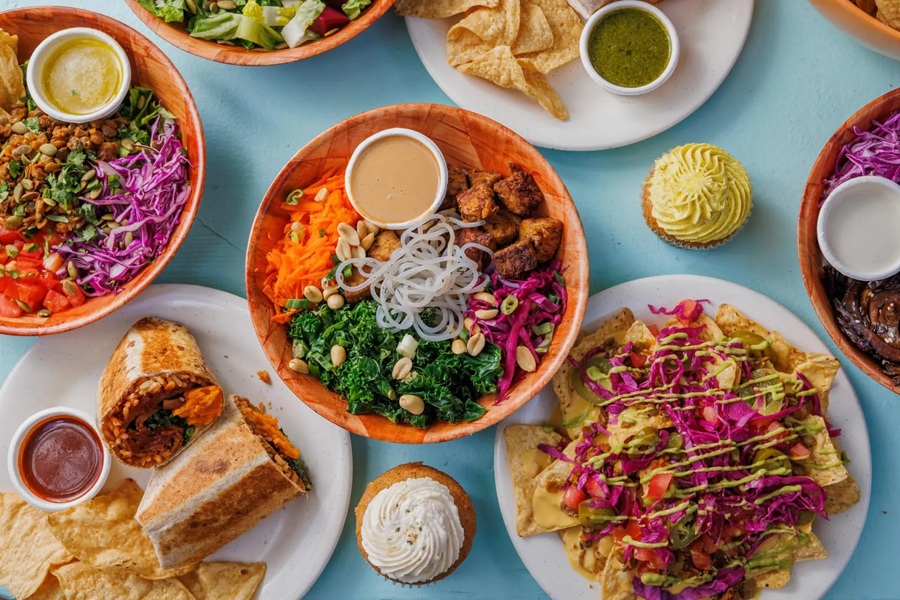

Making lifestyle changes, such as going vegan, can be easier when we feel supported by our friends, family, and the wider environment.
Our lifestyle has a huge influence on our health. How we eat, sleep, and how much we move and connect with others can affect us either positively or negatively.
We’re all familiar with curative healthcare, the branch of medicine that uses treatments and medications to cure health problems. However, physicians can also improve their patients’ health through preventative, evidence-based lifestyle changes.
Lifestyle interventions include changing dietary habits, increasing physical activity, and managing stress and sleep optimally. Also, according to the American College of Lifestyle Medicine, being socially connected can be considered one of the main factors for improved health and well-being.
Making lifestyle changes can be easier when we feel supported by our friends, family, and the wider environment. In fact, research shows that the social environment plays an important role when it comes to adopting and maintaining a healthy lifestyle.
So far, most research has focused on the role of social support in other lifestyle changes. This study specifically investigated how social support influences the adoption and maintenance of plant-based eating patterns. To do so, researchers collected data from participants in the Plant-Based Lifestyle Medicine (PBLM) Program, a lifestyle intervention program for patients with cardiometabolic issues such as type 2 diabetes and heart disease, which launched in New York in 2019.
All participants enrolled voluntarily in the study following various forms of outreach. Most were female, college-educated, in their mid-fifties, identified as either Black or White, and spoke English at home.
Researchers used a mixed-methods approach, collecting quantitative data through a survey and qualitative data through two focus groups. There were 84 survey responses and 17 focus group participants. Data from both sources were analyzed together.
The authors of the study hypothesized that:
- Analysis of the survey responses would demonstrate an association between social support and the adoption of a plant-based diet.
- Analysis of the focus group discussions would help explain this association.
They further hypothesized that social support may in some cases facilitate and in other cases hinder the adoption of a plant-based diet in lifestyle medicine interventions.
Social support has mixed effects
Two main themes emerged from the analyses:
- Positive contribution of social relationships
Positive social relationships include active or passive forms of support. Some participants reported instances of direct positive support from friends and family — for example, having family members adopt the new eating habits with them. Other participants received more indirect, but still encouraging, forms of support, such as help finding plant-based options when eating out.
- Negative contribution of social relationships
Unfortunately, not all participants felt supported by their social environment. Some reported receiving direct negative influences such as attempts at sabotaging their eating efforts. Others received hurtful comments or found themselves in situations in which they were expected to eat meat.
In both cases, the extent and type of support perceived seemed to significantly impact the participants’ ability to start and maintain a plant-based eating habit.
In addition, three secondary themes emerged:
- Mixed social support
Sometimes, participants received conflicting cues from the same person. This shows that even the same person may not always be equally supportive.
- The role of the wider social environmental context
Participants considered aspects such as family context, social media content, and advertising as important contributors to the maintenance of the new diet. Social norms and context were often cited as barriers. Social isolation influenced the participants either positively or negatively. For example, one participant believed that being on their own was the cause for not being able to maintain a plant-based diet. In contrast, another participant reported being successful in their diet change due to living alone and feeling that they could freely choose what to eat without succumbing to social pressure.
- Harnessing social support
Participants reported that seeking and receiving social support helped them stick to their new diet. This was mostly due to receiving positive support and being held accountable by others.
Results from this study suggest that effective behavior change interventions aimed at individuals must also consider the wider environment. The perception of direct or indirect support seems to be an important factor when changing eating habits, as does the availability of plant-based products in supermarkets and restaurants. Considering these factors when designing the interventions may greatly impact their rate of success.
While a change in diet may seem an individual endeavor, considering the opportunities and barriers presented by the immediate (friends and family) and wider (social norms and context) environments can improve the success of plant-based health interventions.
The small sample size and the limited diversity of representation can be considered limitations to the study. However, the findings are still useful to organizations, as well as behavior change and health professionals, in designing a successful plant-based lifestyle intervention. Similarly, the research can also help environmental and animal rights initiatives better tailor their messaging when promoting the adoption of a plant-based diet.
Original source: https://faunalytics.org
https://www.animalagricultureclimatechange.org/wondering-how-to-switch-your-family-to-a-vegan-diet/