
VEGAN HEALTH BENEFITS – OLDER ARTICLES
There are many benefits becoming a vegan, but don’t just believe us – read what the experts are saying below. If you aren’t vegan already, you will be after reading these articles!

Getting to know pigs turned Jon Stewart vegan
Jon Stewart, American comedian, writer, producer, director, political commentator, actor, and host of The Daily Show for many years, retired to run an animal sanctuary with his wife, Tracey. On Realizing that pigs have individual personalities—and working on opening an animal sanctuary—helped Jon Stewart switch to a vegan diet.
In an interview with Rip Esselstyn, founder of the Engine 2 Plant-Strong diet, Stewart said he went vegetarian around the time that he left his role as the host of “The Daily Show” in 2015.
At the wrap party, which consisted of catering tables lined with sliders, Stewart ate the only option available: poached pear and almond butter sandwich. “That was when I first realized, ‘oh, pigs have a personality,’” he said. This was thanks to Tracey.
It was around that time that he and Tracey started working on their animal sanctuary, Hockhockson Farm Foundation in New Jersey. It’s currently home to horses, pigs, chickens, a goat, and sheep.
In the interview, Tracey explained that she Tracey had attended an Engine 2 retreat in Asheville, North Carolina over the summer. She had been vegan for a long time, but upon a doctor’s visit, she found that her numbers were “not great, but not terrible.” She explained that she was still eating a lot of processed foods and oil.
When Tracey returned from the retreat and explained that she thought a whole foods, plant-based diet—which excludes animal products, excess oil, and highly processed foods—would improve her health, Stewart joined her.
While Stewart was slower to change, Tracey still had a positive influence on him. He explained that once he started eating more plant-based food, he felt better and had more energy.
Stewart recalled when Tracey first got involved in animal rights, describing it as “living in a church that I’m not really a member of.” He later added, “She’s always been a vanguard of positive change.” When Tracey learned of the cruelty in the meat and dairy industries, Stewart said, she vowed to never eat animal products again.
Speaking to how the American food system has changed, Stewart said: “It’s clear that something sinister has occurred in the American diet over the last 40 or 50 years.” He added, “foods are no longer really recognizable as foods and that there’s gotta be some consequences to that. And I think we see it in the overall health and welfare of the country.”
Esselstyn asked the couple about Stewart’s transition from meat-eater to plant-based. It was all thanks to Tracey, Stewart explained. He slowly adapted to changes in his diet over time led by his partner’s compassion for animals—Tracey is also the author of the 2015 book “Do Unto Animals“—and evidence that a plant-based diet was better for their health.
Esselstyn asked the couple if the transition has been easy in the second part of the interview. Tracey described her switch to a whole food, plant-based diet as “shockingly easy,” adding that she feels healthier.
Stewart said the difference in how he feels “emotionally and physically is profound.” He joked, “And I’m generally not comfortable with that—feeling so good—so it’s hard for me not to go back to the old ways. I’m not accustomed to this euphoric sense of possibility. I much prefer the depression. The dark nights.”
Original Source: https://www.livekindly.co/

Meat-free food firm launches bacon-scented ‘scratch and sniff’ patch to stop newly vegans overcome cravings
A plant-based food firm has invented a skin patch – similar to a nicotine patch for smokers – to help those trying to adopt a plant-based diet, overcome their cravings for bacon.
The patch, worn on the arm, is infused with a bacon scent, with wearers simply scratching the patch to get a whiff of sizzling bacon to help quell their cravings for meat. Love Island’s Tommy fury, a self-confessed meat-a-holic is supporting them.
Bosses at plant-based food firm Strong Roots teamed up with sensory expert, Professor Charles Spence at the University of Oxford, to develop the patch, the first of its kind.
Professor Spence, the author of Gastrophysics: The New Science of Eating, said the patch would allow wearers to ‘imagine’ they were eating rashers of bacon, leaving them ‘satisfied’.
According to Tyson Fury: ‘Studies have shown that scent can reduce food cravings. Our sense of smell is strongly connected to our ability to taste therefore experiencing food-related cues such as smelling a bacon aroma, can lead us to imagine the act of eating that food.
‘Imagine eating enough bacon and you might find yourself sated.’
A poll of 2,000 Brits found that giving up meat was believed to be tougher than giving up cigarettes or alcohol, with 18 per cent saying they would really struggle to give up meat, compared to 15 per cent for nicotine and 15 per cent for alcohol.
A poll of 2,000 Brits found that giving up meat was believed to be tougher than giving up cigarettes or booze, with 18 per cent saying they would really struggle to give up meat, compared to 15 per cent for fags and 15 per cent for alcohol
Despite the high consumption of meat in the UK, 36 per cent admitted they felt guilty when eating meat – with 43 per cent saying they wanted to reduce the amount of meat they ate.
The study found that half of Brits admitted trying to cut down on the meat they eat, although 56 admitted they failed within the first month and ended up eating the same amount to meat as previously.
A spokesman for Strong Roots said today: ‘Brits keen to adopt a vegetarian diet are about to get scientifically-proven help to wean them off their love of meat. ‘A meat patch – similar to a nicotine patch – is being trialled from this weekend in order to help a nation of carnivores kick the habit.
A spokesman for Strong Roots said today: ‘Brits keen to adopt a vegetarian diet are about to get scientifically-proven help to wean them off their love of meat.
‘A meat patch – similar to a nicotine patch – is being trialed from this weekend in order to help a nation of carnivores kick the habit.
‘It comes after a study of 2,000 adults found that between cigarettes, alcohol and meat, meat is the hardest to give up.’
Samuel Dennigan, the founder of Strong Roots, said: ‘It’s Veganuary and we know that more people than ever are trying to adopt a plant-based lifestyle this year.
‘However, the research shows just how many of them struggle with their resolution, so we wanted to offer a helping hand, and have developed the world’s first ever meat-patch.
‘We hope it goes some way to supporting all the meat-a-holics out there.’
Original Source: –https://www.dailymail.co.uk/

Prostate cancer studies reveals dangers of dairy
Very few people are willing to tell the truth about dairy. But the fact is that it is anything but the healthy food that the dairy industry would like to tell you.
Consuming lots of dairy could raise the risk of men developing prostate cancer, a review of evidence has suggested. The research, based on tracking more than one million participants for up to 20 years, is not the first to suggest that dairy is linked to prostate cancer. It is thought eating large quantities of dairy increases the amount of insulin-like growth factor (IGF) inside the body.
The protein interacts with cells and causes a ‘cascade of reactions’, according to the World Cancer Research Fund International.
Prostate Cancer UK says the link between the disease and dairy products ‘might be because of the calcium in them’ – but added that scientists don’t know for certain.
The review, which analysed studies published since 2006, was published in the Journal of the American Osteopathic Association.
Dr John Shin, lead author, has now called for more trials to investigate the link between dairy products and prostate cancer. Discussing the findings, he said: ‘Our review highlighted a cause for concern with high consumption of dairy products.’
Results also showed men who stuck to plant-based diets were less likely to develop prostate cancer.
The American Institute for Cancer Research recommends a plant-based diet to slash the risk of cancer because of the ‘protective nutrients’. Dr Shin and colleagues pointed out the rate of prostate cancer is higher in Western countries, where people tend to consume more dairy.
More than 47,000 men each year are diagnosed with prostate cancer in Britain. The disease claims the lives of 11,000 people each year.
Original source: https://www.dailymail.co.uk/health/article-7596435/Consuming-lots-milk-cheese-raise-risk-prostate-cancer.html

No compelling reason to cut back meat?
A panel of 14 researchers from seven countries just produced a study finding no compelling reason to cut back on meat. However, they left out the most important part…
Americans consume, on average, more than a half a pound of meat per day – more than our counterparts in any other country. Should we eat less? A panel of 14 researchers from seven countries (all of whom claim to receive no meat-industry funding) just produced a study finding no compelling reason to cut back.
There’s a catch, however: “Considerations of environmental impact or animal welfare did not bear” on their conclusions, the study states. The researchers looked purely at health considerations: whether eating red meat, and also processed meat (think preserved products like sausage, bacon, etc.) increases the risk of cancer, diabetes, or cardiovascular trouble. After crunching data from dozens of red-meat and processed-meat studies, they found “low- to very low-certainty evidence” that reductions in either might produce slight decreases in bad health outcomes. The evidence was so shaky, and the potential health improvements so minor, that the panel concluded that adults can “continue current consumption” of burgers and sausages without major health consequences.
However, human health is about more than individual cases of heart disease or cancer. The US style of industrial meat production is a driver of climate change. And climate change brings all manner of health risks, from broadening the range of disease vectors like mosquitos to food shortages to increasing risk of deadly floods, fires, and heat waves. And there’s a pretty solid consensus that if we’re going to avoid the ravages associated with a 2°C rise in average temperatures over pre-industrial levels, then we’re going to have to cut way back on meat.
Original source: www.motherjones.com

What is it about vegans that make people so uncomfortable?
Maybe it’s because we remind you of the mental gymnastics required to say you care about animal welfare and the climate while you keep eating meat.
The vegans are at it again. 2019 – much like every year – has been a difficult one for us green-collared criminals. While supermarkets across Australia have seen overwhelming expansions in their plant-based offerings, public perceptions of our lifestyle remain as low as our feared B12 count.
What is it about us vegans that makes people just so damn uncomfortable?
The caution around our dietary requirements is arguably warranted. Many assert that veganism just isn’t an option to a large chunk of the population. The labour and cost of sifting through nutritional requirements, alongside inflated pricing for plant-based meat alternatives, is often too great. It’s additionally false to claim that food accessibility is in any way democratic. Many live in areas – popularly termed “food deserts” – where access to fresh produce or even supermarkets is difficult. Meat, dairy and other animal products are also staples to a variety of cultural and religious groups. In Australia, for example, our overtly masculine and sunburnt culture has a real appetite for red meat, namely beef, as per the annual promotional campaigns. The intersections of class, race, culture and veganism makes for a recipe that’s pretty damn hard to swallow.
Other arguments against veganism swerve to the climate crisis, mandating that individual choices (veganism) shouldn’t take priority over real structure “top-down” changes to how carbon emissions are managed.
All these arguments are fair and reasonable, but they’re just not good enough. Most of the people arguing about food deserts and cultural food artefacts live in urban centres with no real cultural connection to their beef souvlaki. Citing that my Lord of the Fries fix isn’t as important as government policies and priorities is understandable – if you’re also ready to forgo recycling and other eco-friendly measures.
No, I’d argue that most people find vegans annoying because it’s one of the only social justice causes whose point of entry is entirely negotiated by real, quantifiable, fundamental behaviour change.
Everyone thinks of themselves as a good person. But it’s much easier to slap “Feminist as Fuck” on your T-shirt and #BlackLivesMatter in your Twitter bio than it is to actively support animal welfare and the climate through an upheaval of your current lifestyle.
Everyone says they care about all these issues, but the mental gymnastics of saying you care about the Amazon burning while simultaneously ordering that beef souvlaki is perhaps just far too laboursome. Instead, it’s much easier to reroute your frustrations at those pesky vegans.
Next time you spot a vegan in the wild, don’t ask them why they’re a plant-muncher; maybe ask yourself – really truly ask yourself – why you’re not.
Original source: https://www.theguardian.com

Bacon is as dangerous as cigarettes
The World Health Organisation has reported that eating bacon could give people bowel cancer. In effect, this means that it is just as bad as smoking cigarettes. Read more

More carrots and celery sticks needed for healthy diets
Despite the continued prominence of fruits and vegetables in the discussion of healthy diets, far too many of us are not eating enough of them. Read more

What’s wrong with eating hot dogs, lunch meat and bacon?
Hot dogs and other processed meats – like bacon, sausage, ham and lunch meat have significant health risks. Read more

Eating bacon is “as likely” to cause cancer as asbestos
Bacon causes cancer at rates similar to asbestos exposure, says a group of health care workers urging hospitals to ban processed meat. Read more

Going vegan? Here’s what to expect in the first 30 days…
The first 30 days of going vegan are going to be exciting and challenging. Here are 7 things you can expect to experience in those first 30 days. Read more

How plant-based diets can benefit the Earth
People have become increasingly aware of the health benefits of a plant-based diet, but how exactly does forgoing animal products help the environment? Read more

5 simple rules for a cheap vegan diet
Eating a plant-based diet is often touted as being expensive. It doesn’t have to be that way. Read more
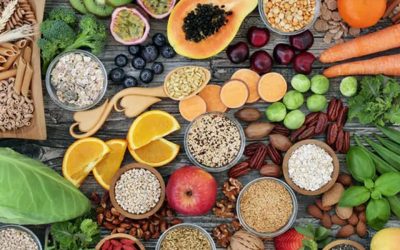
Vegans have a ‘healthier biomarker profile’
A recent study examined how dietary choices, including a plant-based diet, affect the levels of beneficial biomarkers in the body. Read more

Plant-based meal planning
Whether you’re already into meal planning and want to transition towards a plant-based diet or you’re already a vegan and want to reap the benefits of meal planning, this will be incredibly helpful. Read more

White lies: The health risks of dairy
Many people believe that cow’s milk is essential in the human diet, but there are a number of health risks associated with consuming it. Read more