
The meat and dairy industries are responsible for far more harm to our environment than any other agricultural sector.
How we produce food affects wildlife and our environment. The collateral damage of deforestation, drought, pollution and greenhouse gases that come from toxic agricultural practices are devastating for endangered and threatened wild plants and animals. The meat and dairy industries are responsible for far more of these harms than any other agricultural sector. In addition to causing damage from feed-crop production and grazing, meat producers directly target many wild animals.
Direct killing and species endangerment
From grasshoppers and prairie dogs to bison and wolves, native species are routinely killed in large numbers to protect meat-production profits. Grass-eating species like elk, deer and pronghorns have been killed en masse to reserve more feed for cattle. Important habitat-creating animals such as beavers and prairie dogs have been decimated because they disrupt the homogenous landscapes livestock managers want.
All too often the interests of the livestock industry get precedence over wild animals in their natural habitats. Wildlife Services, a program of the U.S. Department of Agriculture, shoots, traps and poisons millions of wild animals every year — including wolves, foxes and bears in national forests — to make more room for cows and other farmed animals. This federal killing program uses taxpayer dollars to kill native wildlife, even on public lands, with minimal oversight or public transparency. It also often lets meat producers kill wildlife directly.
As a result, critical and beloved species risk extinction. “Predator control” programs like Wildlife Services, designed to protect the meat industry, have driven keystone predators like California grizzly bears and Mexican gray wolves extinct in their ecosystems. Flying in the face of modern conservation science, the meat industry remains the leading opponent to otherwise popular efforts to recover species like the Mexican gray wolf in Arizona and New Mexico.
Climate change
Animal agriculture is responsible for at least 16.5% of human-induced global greenhouse gas emissions. In the United States, cattle emit about 5.5 million metric tons of methane — a greenhouse gas 86 times more potent than carbon dioxide (over a 20 year period) — accounting for 36% of the country’s human-induced methane emissions. Adding to the emissions from farmed animals’ feeding, digestion and transportation, the amount of land used for feed crops and grazing multiplies the carbon hoofprint of meat consumption. Scientists predict that more than one-third of the Earth’s animal and plant species will be extinct by 2050 if current greenhouse gas emissions trajectories continue. That would be a catastrophic loss with irreversible consequences for biodiversity, ecosystems and human societies around the world.
Meat production is a major contributor to the rising temperatures that are further altering or eliminating habitat, reducing food sources, and causing both drought and rising sea levels — a major threat to U.S species. A groundbreaking Center report found that, of the nation’s 1,383 federally protected species, 233 threatened and endangered animals and plants in 23 coastal states are at risk from sea-level rise. This means that rising seas threaten 17% of protected U.S. species.
And of course the problem isn’t confined to the United States. Due to sea-level rise, six out of the world’s seven sea turtle species are on the endangered species list, including the loggerhead sea turtle, and more than a million other species globally risk extinction due to climate change.
Habitat loss
Humans use approximately 50% of total habitable land for agriculture – 77% of which is used to produce meat and dairy. In the United States, 80% of agricultural land is used for farmed animals and feed crops. That’s almost half the land mass of the lower 48 states dedicated to feeding the nation’s taste for beef, chicken and pork. More than half of the grain grown in the country goes toward feeding farmed animals, and nearly half the water used goes toward meat production.
Wildlife face devastating habitat loss, a major factor in many endangered species’ decline. Studies have shown that animal agriculture is the leading threat to global biodiversity. Meanwhile grazing cattle and sheep destroy vegetation, trample land, damage soils, contaminate waterways with fecal waste, and disrupt natural ecosystem processes. The loss of wild habitat has terrible consequences for ecosystems that are obvious when we examine the precipitous decline of a once-common species like the American bison.
Water use and pollution
Animal agriculture consumes massive quantities of water. It takes about 2,464 gallons of water to produce a single pound of California beef. In total, 50% of all consumable water used in the United States goes toward meat and dairy production.
Much of the water not consumed by animal agriculture is polluted by it. Factory farms are industrial facilities where meat-production operations, farmed animals, feed, manure, urine and dead animals are concentrated in unsanitary, polluting conditions. Factory farms consistently fail to confine the staggering amount of waste they produce, and few laws require them to treat or clean up their mess.
Animal agriculture produces 500 million tons of manure per year that poses a severe threat to natural water sources. Factory farms pollute more than 35,000 miles of rivers in 22 states; contaminate groundwater in 17 states; and impair wetlands, lakes and estuaries. Meat production is responsible for 80% of antibiotic use (and the growth of antibiotic resistance). Meat and dairy also contribute 37% of pesticide use, much of which ends up in waterways and other wildlife habitats through improper handling of manure and agricultural runoff, and creating dead zones and eutrophication.
Grazing
Grazing by the meat and dairy industry is promoted, protected and subsidized on 270 million acres of public lands in 11 western states, degrading the landscape and further threatening more than 175 federally protected U.S. species. In fact grazing practices are among the greatest direct threats to imperiled species, affecting 14% of threatened or endangered animals and 33% of threatened or endangered plants.
Extensive studies have documented the devastating environmental impacts of overgrazing cattle, including erosion and soil loss, water pollution, the degradation of wetland and stream habitats, and the spread of invasive plants. The ecological costs of grazing cattle and sheep exceed that of any other western land use — yet grazing is highly subsidized by the government, under pressure from the meat industry.
Grazing cattle destroy native vegetation, damage soils and stream banks, and contaminate waterways with fecal waste. Overgrazing has reduced once-lush streams and riparian forests to flat, dry wastelands, and has turned once-rich topsoil to dust — which causes soil erosion, stream sedimentation, and the wholesale elimination of many aquatic habitats. Overgrazing of fire-carrying grasses has starved some western forests of fire, leaving them overly dense and prone to unnaturally severe fires. Cattle and sheep fencing creates problems for wildlife like increased predation; injuries from collision; and restricted access to food, water and shelter.
Livestock grazing wreaks ecological havoc on riparian areas, rivers, deserts, grasslands and forests alike.
Pesticides
About half of all harvested U.S. cropland is used to produce animal feed. Most feed crops are corn, soy and other monocultures drenched in 167 million pounds of pesticides every year. Meat production is responsible for 37% of all pesticide use in the United States.
Pesticides threaten the survival and recovery of hundreds of federally protected species, including polar bears, salmon, sea turtles, kit foxes, and many sensitive birds, amphibian and insect species. Producing pesticides relies on fossil fuels, contributing to climate change and air pollution, and creates byproducts that are toxic to humans and wildlife. Particularly at risk are native pollinators like bees and butterflies.
You can thank these pollinators for one out of every three bites of food you eat. If you like apples, almonds, blueberries, cherries, avocados, cucumbers, onions, grapefruits, oranges or pumpkins (just to name a few), thank a pollinator . Most agricultural crops — more than 100 of them — can’t grow without these pollinators, which would mean a lot less food available for the rapidly growing global population. Each year $15 billion worth of crops are pollinated by bees in the United States alone.
Overfishing and bycatch
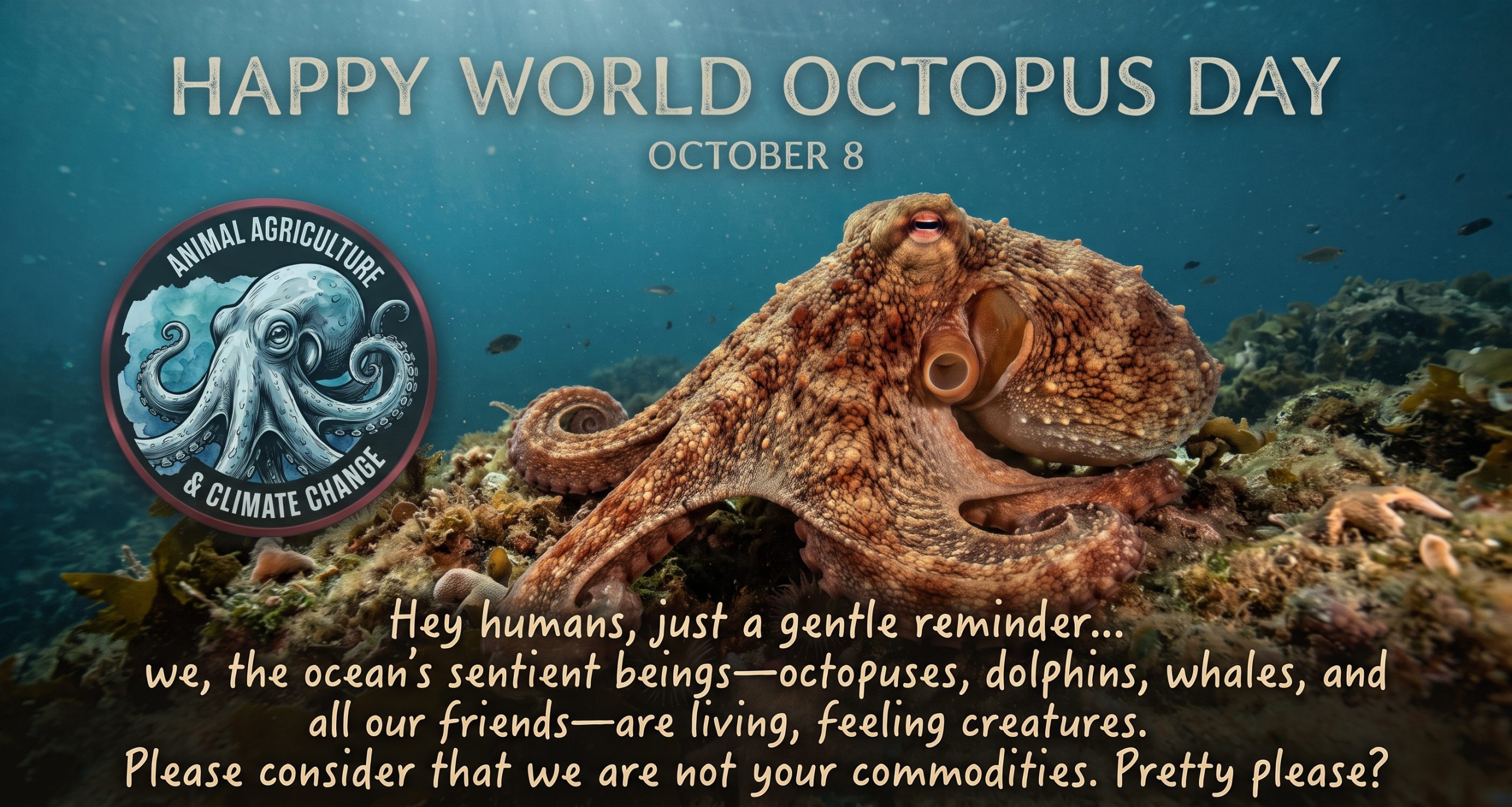
So far the statistics on this site have been about animal agriculture on land, but the fishing and aquaculture industries — along with the unsustainable fishing, ocean acidification, climate change and pollution they help drive — are pushing many marine species toward extinction. And with ocean waters covering nearly three-quarters of the Earth’s surface, the seafood industry’s poorly regulation allows for massive exploitation by commercial fisheries. These fisheries are removing life from the sea at astonishing rates, including millions of tons of discarded “bycatch” every year.
Bycatch is sea life that’s captured by fisheries and not sent to market for consumption. It’s an inevitable consequence of fisheries that use methods like trailing mile-long nets through the ocean, indiscriminately sweeping up all kinds of ocean life, or dropping down 60-mile-long baited fishing lines that attract and entangle marine animals and birds. Every year U.S. fisheries unintentionally catch almost 2,000 federally protected marine mammals, almost 12,000 sea turtles —including federally protected loggerheads and leatherbacks — and more than 7,600 seabirds.
Furthermore, fisheries degrade water quality, disrupt the food chain by removing large numbers of specific species, and destroy crucial habitat. This assault against oceans is constant, and it’s taking a huge toll on the wellbeing of marine life, from whales and turtles to the fish species fished for.
Original source: https://takeextinctionoffyourplate.com
https://www.animalagricultureclimatechange.org/why-quitting-meat-could-save-the-planet/