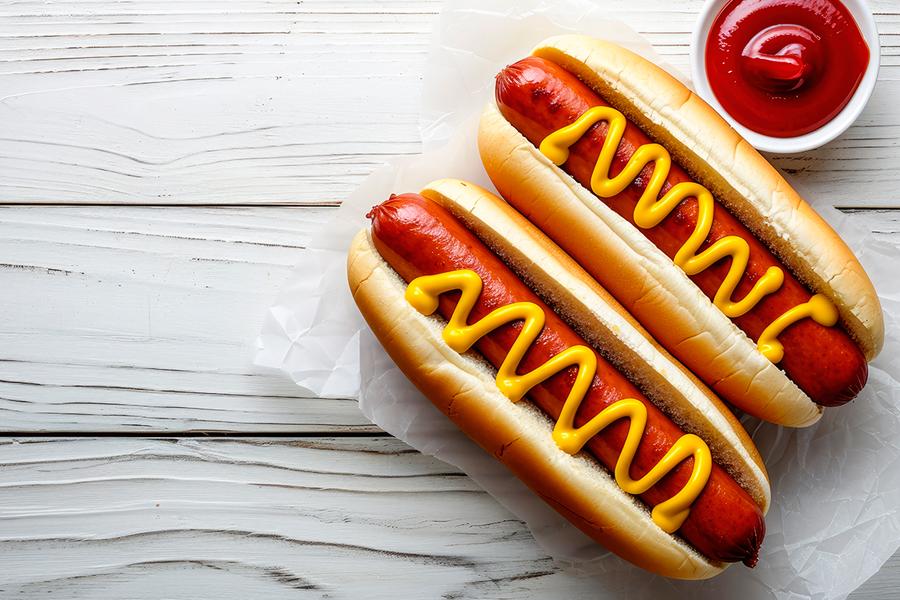
The hotdog is a cooked sausage made of highly processed, lower-grade and less desirable cuts of meat that have been turned into sludge.
Hotdogs are a popular American staple of summer cookouts and other social gatherings. Also known as frankfurters, franks, or wieners, the hotdog is a cooked sausage made of highly processed meat that allows for less desirable cuts of meat to be rebranded. These cuts are ground into a slurry with a significant amount of fat and water, packed with seasoning and smoke flavour, and cooked into hand-length tubes to be sold as hotdogs.
Hotdogs comprised about 3.4 percent of total meat sales in the U.S. in the last quarter of 2021: less popular than dinner sausage, and slightly more popular than breakfast sausages. The four brands of refrigerated hotdogs with the most sales in the U.S. were Bar-S (a brand of Sigma Alimentos, a subsidiary of Alfa), Ball Park (a Tyson Foods brand), Oscar Mayer (a subsidiary of Kraft Heinz), and John Morrell (a Smithfield Foods brand, a subsidiary of WH Group of China), moving a total of 104.2 million units in 12 weeks ending in late January 2022.
In the United States, other well-known brands of hotdogs include Hebrew National (ConAgra Brands), Nathan’s (mostly made by Smithfield Foods), and store brands including Sam’s Choice, and labels sold by Trader Joe’s and Whole Foods.
What are hot dogs made of?
Traditionally, hotdogs are made of red meat, pork or veal, though there are variations of the cooked sausage that include grains. More modern hotdogs can instead be made of vegetable protein such as textured soy. There are even chicken and turkey hotdogs.
Hotdogs are often made of combinations of different meats, including poultry. However, some of the most popular types of hotdogs in the United States are 100 percent beef, turkey, chicken, or pork. Also popular are corn dogs, hot dogs with cheese, and vegetarian hot dogs.
Beef, pork, and poultry are turned into finely chopped meat and pressed into a meat slurry or batter. About 30 percent of the hotdog is fat, and fat and water mixed together make up about 50 percent. The slurry is usually seasoned with spices like paprika, red pepper, sugar or corn syrup, salt, black pepper, and sodium nitrite. Filler for hotdogs can include nonfat dried milk and powdered bone meal.
Meat trimmings
The meat used for hotdogs is known as meat trimmings. Rather than discard the meat that is left over after the most choice cuts of an animal carcass are sent along to be served a la carte, the industry scrapes it to the bone (sometimes including the bone) and cooks it before turning it into a thick batter.
Meat from an animal’s head, feet, liver, fatty tissue, lower-grade muscle, blood, and more can be included in what is described as “meat trimmings,” or the primary source of meat for hotdogs. If the ingredient list contains “byproducts” or “variety meats,” the meat may come from the snout, lips, eyes, or brains.
What part of the pig are hotdogs made of?
Whether the animal parts are from pigs, cows, or turkeys, research led by high-school student Brigid Prayson in 2008 found that meat in store-bought hotdogs was largely made up of body parts other than skeletal muscle, which is what people mean when they talk about eating meat. These body parts included “bone, collagen, blood vessels, plant material, peripheral nerve, adipose tissue (fat), cartilage, and skin.” The study found that most brands tested were “more than 50 percent water by weight” and were made of less than 10 percent meat, defined as skeletal muscle.
What’s in a beef hotdog?
A beef hotdog must be made only from cows and not include byproducts, according to the USDA. Because of precautions against bovine spongiform encephalopathy, or mad cow disease, beef franks, unlike franks made with poultry or pork meats, cannot be made with mechanically separated beef.
Mechanically separated meat is a meat paste that is made by “forcing bones, with attached edible meat, under high pressure through a sieve” to detach the meat from the bone. Hotdogs with mechanically separated pork or chicken must be labeled as such in their ingredients list. Mechanically separated meat is also described as “white slime.”
What gross things are in hotdogs?
What people think of as acceptable to eat is highly personal, and yet there are types of food that are commonly considered to be more disgusting than others. Offal, also known as byproducts or variety meats, is a less popular meat ingredient in hotdogs that has been used in animal feed and for industrial uses.
According to the USDA, hotdogs made with byproducts or variety meats must consist of at least 15 percent skeletal muscle. The byproducts used must be named specifically, such as heart, kidney, or liver, as well as the animal from which they came. Industry websites say that offal is an uncommon hotdog ingredient.
Hotdog ingredients and procedure
In the United States, the ingredients of a hotdog are listed so that all of them are named, starting with the ingredient that makes up the highest percentage of the hotdog and ending with the ingredient that makes up the smallest percentage.
Select meat trimmings
Even though a hotdog may be listed as containing beef, pork, chicken or some other simple-sounding meat as a primary ingredient, how the meat is produced is a complicated technical feat. Using special machinery, “pieces of meat are scraped, shaved or pressed off the bone” of beef and pork bones in a process known as advanced meat recovery (AMR). Once the meat has more than a certain amount of calcium, that means there are too many bits of bones in the meat and it is now considered “mechanically separated” meat.
Blend the ingredients
This gristly meat is cooked and churned into a paste, at which point other ingredients are added. As Yasmin Tayag writes for Inverse, hotdogs are the result of a blend of “mashed-up pork and beef trimmings that are swirled together with processed chicken trimmings, food starch, flavourings, corn syrup, and lots of water.” Tayag explains that another ingredient added to hotdogs is sodium nitrite, which gives the meat-slurry-in-a-tube its pink colour, making it look fresh and familiar to consumers. Without sodium nitrite, meats become an unappetising grey colour, though they are also less likely to cause cancer, according to a nutritionist quoted by April Benshosan. The temperature at which nitrites are cooked is an important aspect of their link to cancer.
Benshosan explores lesser-known ingredients typically found in hotdogs, including preservatives like potassium lactate and sodium diacetate. Other additives include sorbitol (a “highly processed sugar alcohol” that can make people gassy), sodium phosphate (to help keep processed meats moist), and hydrolyzed corn protein (an MSG-like flavor enhancer).
Fill the casings
The meat paste is then automatically pushed into clear, sock-like tubes made of cellulose that resemble plastic film. Casings are sometimes made with actual animal intestines, but most hotdogs are now skinless in their final form.
Cook the hotdogs
The frankfurters are cooked in their casings and rinsed with water. Even though they are precooked, the USDA website recommends that consumers heat hotdogs until they are “steaming hot” as a matter of food safety.
Cool hotdogs and remove casings as needed
The hotdogs are then cooled in a water shower, according to the National Hot Dog and Sausage Council website. An automatic peeler strips the cellulose casings from the hotdogs.
Package and box for distribution
The hotdogs are inspected and sealed into vacuum-packed plastic film with the assistance of conveyor belts and packaging equipment. Finally, within hours of starting as meat trimmings, the hotdogs are boxed and loaded into storage coolers and refrigerated trucks.
The truth about hotdogs
There is not a lot of actual meat in hot dogs, even when it’s listed as a top ingredient. They are mostly water and fat, with a tiny bit of meat in the traditional sense. The meat that is used is lower-grade and has been turned into sludge.
Original source: https://sentientmedia.org