According to new global estimates, antibiotics use in livestock could rise by a third in next 15 years without urgent government intervention.
The use of antibiotics on livestock will rise by nearly a third in the next 15 years without government intervention, according to new global estimates, with potentially disastrous impacts on human resistance to essential medicines.
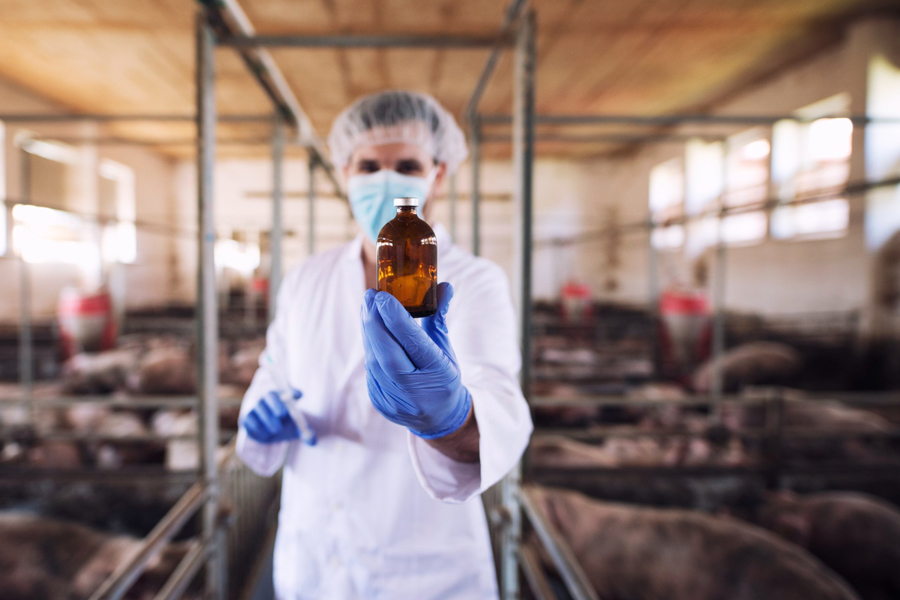
Animal husbandry accounts for close to three-quarters of global use of antimicrobial medications and in many countries their use is poorly monitored. Some herds are routinely dosed and in many countries antimicrobials are used to increase the growth of animals bred for meat.
This is one of the leading causes of the rise of superbugs, which are threatening to render antibiotics useless against increasingly resistant diseases. Antimicrobial resistance (AMR) already costs an estimated €11bn (£9.5bn) a year within Europe alone and is predicted to cost $1tn globally by 2050. AMR is forecast to kill tens of millions of people unless there is concerted action, and to make what are currently routine surgeries such as hip replacements life-threatening.
Recent successes in reducing the amount of antibiotics used in farming have borne fruit, with the tonnage used down about a third from its peak in 2013. But these advances are now in danger because of growing global demand for meat and lax regulation. Many producers are returning to the use of antibiotics for growth promotion.
A report from the UN’s Food and Agriculture Organization published on Wednesday says a continuation of current trends would result in more than 143,000 tonnes of antimicrobials being administered to livestock annually by 2040, a 30% increase from 2019 and surpassing the previous peak of 118,000-130,000 tonnes in 2013.
But the authors say this is not inevitable. Farmers and meat producers could be taught more efficient methods, which would reduce the need for growth enhancement and make disease prevention easier.
Producers are caught in a vicious circle because higher use of antibiotics results in greater resistance to the drugs. The resulting losses to livestock alone could reach a cumulative $318bn by 2040, compared with a maximum cost of $53bn in total to phase out the use of growth promoters.
Cóilín Nunan, of the Alliance to Save Our Antibiotics (ASOA), who was not involved in the FAO report, urged governments to act. “Phasing out the use of antibiotics for growth promotion, one of the worst misuses of antibiotics, will not be costless,” he told the Guardian. “But [the FAO report] says that the economic impact associated with rising antibiotic resistance in livestock, including lower production and higher food prices, will be far higher and longer-lasting.”
The FAO argues that antibiotic effectiveness should be regarded as a global public good and governments should act to prevent the overuse of key medicines.
Nunan said: “The solution is better regulation of farm antibiotic use combined with policies aimed at minimising illness in farm animals. In our view, this means a move away from intensive, unhygienic and stress-inducing forms of livestock farming, towards more health-orientated farming systems where antibiotics are rarely needed.”
ASOA has also called for the UK to ban imports of meat produced with growth promoters. British standards on the use of antibiotics in farming have not kept pace with those in the EU since Brexit, and EU rules are soon to be strengthened further.
The use of antibiotics for growth promotion has been banned in the EU and the UK since 2006 but some imports have been allowed to continue. From September, the import of all meat, dairy and eggs produced with antibiotics as growth promoters will be banned by the EU.
Nunan said this was putting pressure on countries that used antibiotics irresponsibly to raise their standards, pointing to Brazil which is toughening its rules on the drugs.
He called on the UK to put similar rules in place. “Extending the EU’s ban on antibiotic growth promotion will help protect public health and shield farmers from unfair competition,” he said. “The UK government needs to implement a similar ban, to protect its consumers and farmers. The new sanitary and phytosanitary agreement that is being negotiated between the UK and the EU provides an ideal opportunity for the UK to align with the EU on this and other important farm antibiotics standards.”
A Government spokesperson said: “The UK upholds extremely high food standards – the domestic use of antibiotics for growth promotion is banned and all trading partners must comply with strict certification requirements to ensure that antimicrobials have not been used in food producing-animals or animal products exported to Great Britain.
“Our food and drink deal with the EU will benefit farmers and consumers by removing unnecessary barriers for British food and drink exports to our largest trading partner.”
Original source: https://www.theguardian.com
https://www.animalagricultureclimatechange.org/climate-change-antibiotic-resistance/