
Billie Eilish’s Manchester shows cut food-related emissions by 47% with a fully vegan menu, setting a new benchmark for sustainable live entertainment.
A new report has shown that vegan food served on recent Billie Eilish UK tour dates cut food-related emissions by almost 50 per cent, setting a new standard for sustainable live entertainment.
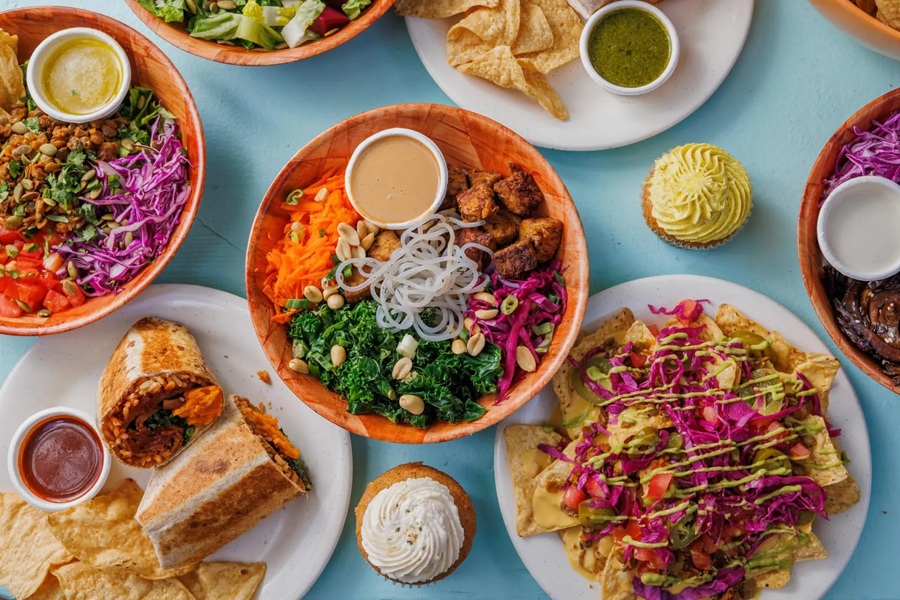
By making a bold move to a fully plant-based food menu for Eilish’s four sold-out shows, the Co-op Live arena in Manchester saw a dramatic 47 per cent reduction in food-related carbon emissions. This saving is equivalent to the emissions from 45 flights between Manchester and Dublin, or powering 70,000 washing machine cycles.
This groundbreaking success has been highlighted in a new case study from GOAL (Green Operations & Advanced Leadership) and has set a new benchmark for venues worldwide.
The initiative wasn’t just a win for the planet; it was a hit with concert-goers, too. The plant-based menu saw a 13 per cent sales boost compared to typical shows, with some of the more popular items reducing emissions by up to 65 per cent.
How Billie Eilish set a new sustainability benchmark on tour
The initiative was part of a broader effort to drive industry-wide change. During the four-night residency, Co-op Live and GOAL hosted a Sustainability Leaders’ Forum, bringing together key figures in eco-conscious live entertainment.
This included climate activist and Support+Feed founder Maggie Baird, who is also Billie Eilish’s mother. These leaders gathered to discuss practical, scalable ways to accelerate climate action across the global events sector.
The success of the plant-based menu has been a significant step in the arena’s mission to become the world’s most sustainable arena experience.
In a statement sent to Vegan Food & Living, Sara Tomkins, Sustainability & Community Director at Co-op Live, said the venue was proud to “deliver impact within the walls of our arena and outside of them.” She continued, “The Billie Eilish shows demonstrated the impact of locally grown produce and plant-based options, resulting in a planet-positive outcome.”
Original source: https://www.veganfoodandliving.com