Animal agriculture drives emissions, deforestation, and water waste, making vegan diets a powerful solution to environmental crises.
Every day, we hear about the dangers of climate change. But what if there were just ONE thing we could all do to help stop it?
The global demand for meat and animal products is wreaking havoc on our planet. Read on to learn why choosing vegan foods is the best thing you can do to help the environment (and animals, of course!).
1. Animal agriculture causes an estimated 18 per cent of all greenhouse gases
That’s roughly equivalent to emissions caused by the entire worldwide transport sector – every car, plane, train and boat on the planet combined.
2. Raising animals for flesh, eggs and dairy causes 65 per cent of all nitrous-oxide emissions
Nitrous oxide has 296 times the global-warming potential of carbon dioxide. Oh, and it stays in the atmosphere for up to 150 years.
3. The UN says animal agriculture is a significant contributor to our environmental problems
Even the UN admits that the animal agricultural industry is “one of the top two or three most significant contributors to the most serious environmental problems, at every scale from local to global”.
Are you going to argue with the UN?
4. Producing animal protein uses up all our land
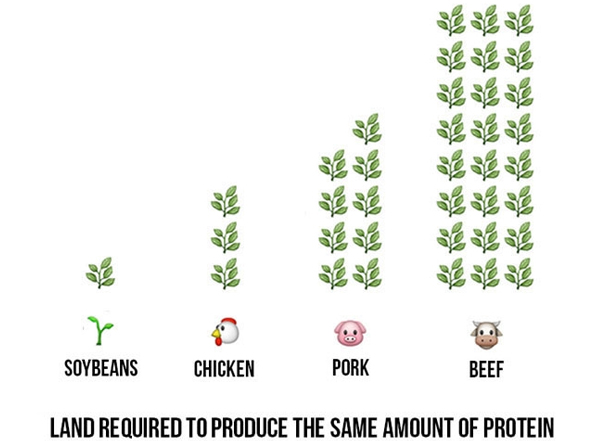
Producing protein from chickens requires three times as much land as producing protein from soybeans. Pork requires nine times as much land, and beef 32 times.
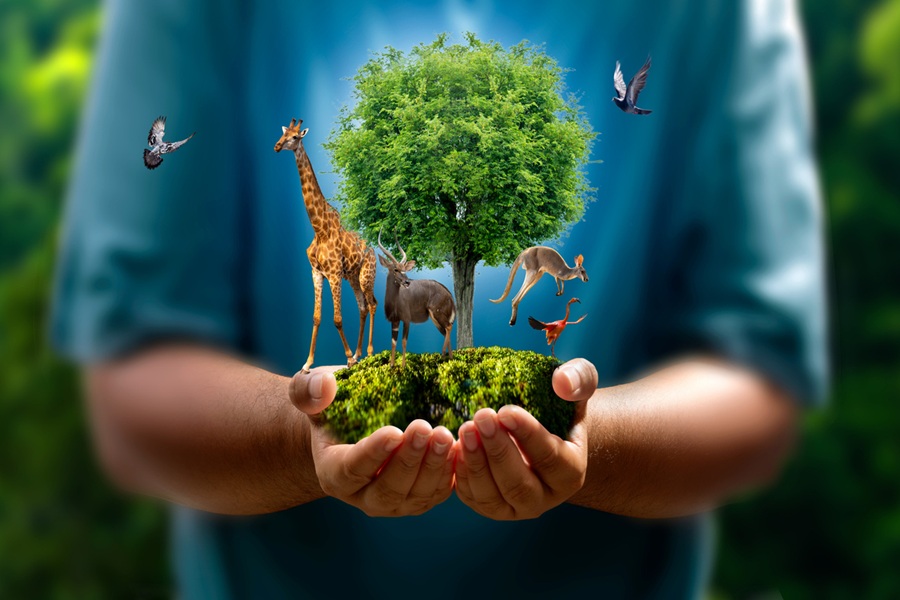
5. Meat consumption is killing our wildlife
Meat consumption is thought to be one of the leading causes of species extinction. As land is cleared for animals to graze or to grow feed for them, wildlife is losing out.
6. Cows = methane
Cows produce 150 billion gallons of methane per day. The smell of climate changes stinks!
7. Agriculture emissions are going to increase
Emissions for agriculture are projected to increase 80 per cent by 2050. If we don’t act now, these problems will get a whole lot worse.
8. Meat production uses an enormous amount of water
If you eat meat, you’re responsible, on average, for the consumption of 15,000 litres of water a day. Yet around 1.2 billion people – almost one-fifth of the world’s population – face water shortages.
One steak takes 7,500 litres of water to produce. Producing the same quantity of pasta requires just 925 litres.
9. We have enough food for the world – except it’s going to livestock
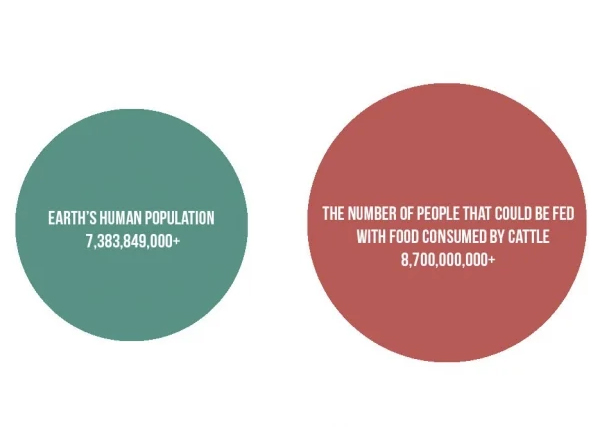
The world’s cattle alone consume a quantity of food equal to the caloric needs of 8.7 billion people, more than the entire current human population of the Earth.
If we ate the grain ourselves, instead of funnelling it through animals on farms first, there would be more than enough to end world hunger.
10. Raising animals for meat uses up most of our Earth’s land
Animals exploited for their flesh or their feed covers one third of the Earth’s ice-free land. Going vegan could literally change the face of our planet.
11. Animal agriculture produces tonnes of harmful waste
A dairy farm with 2,500 cows produces the same amount of waste as a city of 411,000 people.
These huge cesspools of manure can emit toxic gases, contaminate drinking water, harbour disease-causing pathogens and kill wildlife.
12. Three-quarters of the world’s fish are exploited or depleted
Industrial fishing is literally emptying our oceans. For every 1 kg of fish caught, up to 5 kg of unintended marine animals are also caught and then discarded as by-catch. Dolphins, sharks and turtles are among the “accidental” victims.
13. Our rainforests are disappearing
Animal agriculture is responsible for up to 91 per cent of the destruction of the Amazon rainforest. You can save our vanishing landscapes – by simply leaving animal products off your plate!
14. When you do the maths, eating vegan really adds up
A person who follows a vegan lifestyle produces the equivalent of 50 per cent less carbon dioxide than a meat-eater and uses an 11th of the oil, 1/13th of the water and 1/18th of the land.
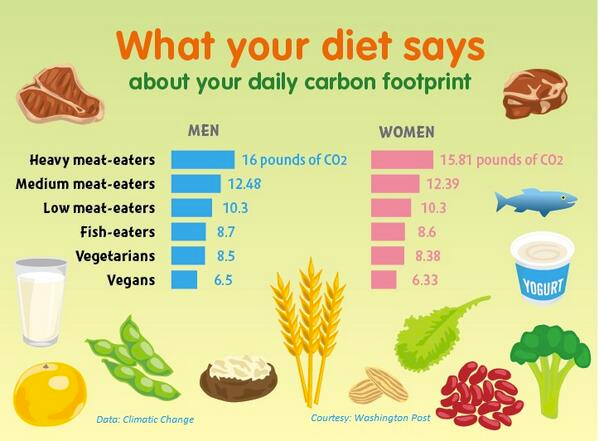
These facts make one pretty compelling argument for eating plant-based foods!
Original source: https://www.peta.org.uk
https://www.animalagricultureclimatechange.org/imperfect-vegan/